
Uses your browser’s reading voice.
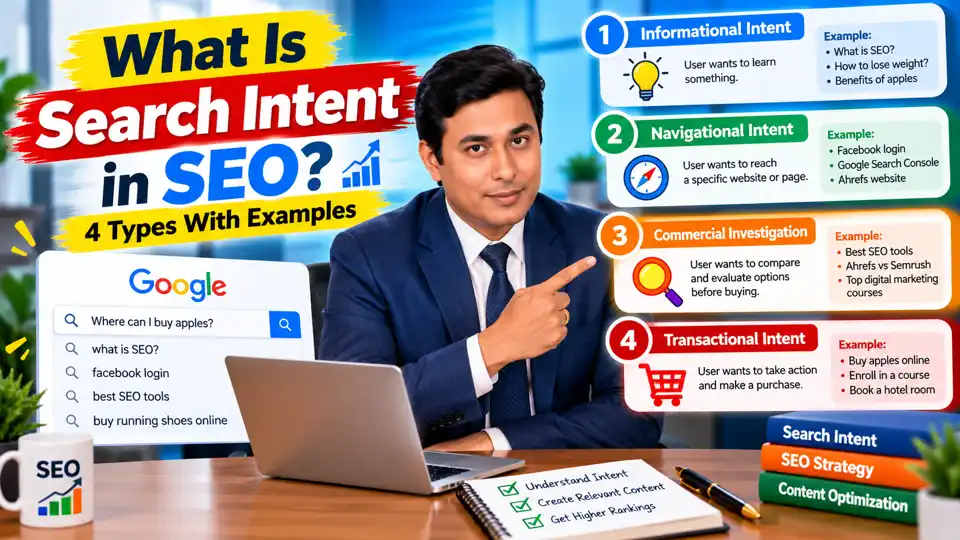
Imagine someone searches Google for "Where can I buy apples near me?" Would they be satisfied with a 2,000-word article explaining the nutritional benefits of apples?
Probably not. They are most likely looking for a nearby grocery store, fruit shop, or supermarket where they can purchase apples.
Now imagine someone searches for "What are the health benefits of apples?" In this case, an informative article may be exactly what they need.
Both searches involve apples, but the searchers have different goals. This difference is known as search intent.
Understanding search intent is essential for SEO because even well-written content may struggle to perform if it does not satisfy what users expect to find. The objective is not merely to include the right keywords but to provide the right answer in the right format.
In this guide, you will learn what search intent means, explore its four main types, and discover how to use it to create more relevant content and attract qualified organic traffic.
What Is Search Intent in SEO?
Search intent, also called user intent or searcher intent, is the primary goal a person wants to accomplish when entering a query into a search engine.
In simple terms, it answers one question: What is the user trying to find or do?
A person might want to learn something, visit a particular website, compare products, or complete a purchase. Their search query provides clues about their objective.
For example:
- "What is digital marketing?" indicates a desire to learn.
- "Semrush login" indicates a desire to reach a specific website or page.
- "Ahrefs vs Semrush" suggests a comparison before making a decision.
- "Buy running shoes online" indicates an intention to purchase.
These searches belong to different intent categories, even though they may relate to the same broad industry.
For SEO professionals, identifying this intent helps determine which keywords to target, which pages to create, and how to structure content to meet users' expectations.
Why Is Search Intent Important for SEO?
Search intent helps connect your content with the actual needs of your audience.
You can target a keyword, use it in your headings, and optimize your meta description, but those efforts may not be enough if your page does not answer the question behind the search.
Here is why search intent matters.
1. It Helps You Create Relevant Content
When you understand what users want, you can choose the most suitable content format.
Someone searching for "how to do keyword research" probably needs a step-by-step guide. Someone searching for "best keyword research tools" may prefer a comparison with features, advantages, limitations, and pricing information.
Matching the format to the user's needs makes your content more useful.
2. It Helps You Target the Right Keywords
Search intent allows you to group related keywords that serve the same purpose.
For example, "best SEO tools," "top SEO tools for beginners," and "SEO software comparison" may all support a commercial investigation page if the search results indicate that users want to compare available options.
Instead of creating a separate page for every phrase, you can often address closely related queries in one comprehensive resource.
3. It Can Improve Organic Search Performance
Google aims to present results that are relevant and helpful for users' queries. Content that aligns with the purpose of a search is therefore better positioned to compete for relevant visibility.
However, matching search intent does not guarantee first-page rankings. Content quality, competition, technical accessibility, and many other considerations can influence performance.
4. It Attracts More Qualified Visitors
Not every website visitor is ready to purchase.
A person searching for an introductory explanation may need educational content, while someone comparing service providers may be closer to contacting a business.
When your content matches these different needs, you can guide visitors toward appropriate next steps, such as reading a guide, comparing options, requesting a consultation, or making a purchase.
5. It Supports Better Conversion Opportunities
Search intent can help you choose relevant calls to action.
For example, an educational article about SEO may offer a related beginner's guide. A page targeting "SEO agency pricing" might instead encourage users to request a quotation.
The call to action should reflect the reader's immediate needs rather than forcing every visitor toward the same conversion.
What Are the Four Types of Search Intent?
Search intent is commonly divided into four categories:
- Informational intent
- Navigational intent
- Commercial investigation intent
- Transactional intent
Let's explore each type with examples and suitable content formats.
1. Informational Search Intent
Informational intent occurs when someone wants to learn about a topic, understand a concept, or find an answer to a question.
The searcher may be researching a problem, exploring a new subject, or looking for instructions.
Examples of informational keywords
- What is search engine optimization?
- How does Google rank websites?
- How to lose weight safely
- What are the benefits of email marketing?
- How to do keyword research
- Why is my website loading slowly?
These queries indicate that the user primarily wants information rather than an immediate purchase.
What content works best for informational intent?
Suitable content formats include:
- Educational blog posts
- Step-by-step tutorials
- How-to guides
- Explanatory articles
- FAQs
- Educational videos
- Glossaries and reference resources
For example, if you target "What is keyword research?", your page should explain the concept, why it matters, and how beginners can get started.
A page that immediately pushes visitors to buy an SEO package without explaining keyword research may not satisfy their initial need.
How to optimize for informational intent
Answer the main question early, organize the explanation with descriptive headings, provide examples, and link to relevant resources for readers who want to learn more.
You can also include a relevant next step. An article about keyword research might link to a detailed guide on keyword research tools.
The goal is to educate first and guide readers toward additional resources when appropriate.
2. Navigational Search Intent
Navigational intent occurs when a person wants to reach a specific website, brand, platform, or webpage.
Instead of looking for general information, the searcher already has a destination in mind.
Examples of navigational keywords
- Facebook login
- Google Search Console
- Ahrefs login
- Semrush website
- YouTube Studio
- MarketingGyan
In these cases, the user generally wants to find the intended destination quickly.
What content works best for navigational intent?
The most suitable result is usually the official website, login page, branded landing page, or specific resource the user is looking for.
For example, someone searching for "Google Search Console login" wants to access the platform, not read a lengthy article about the history of website analytics.
How to optimize for navigational intent
For a business, maintain a clear website structure and make important branded destinations easy to find.
Useful practices include:
- Using a consistent brand name.
- Creating clear navigation menus.
- Maintaining accurate business information.
- Linking important pages internally.
- Ensuring key pages are accessible and indexable where appropriate.
You cannot always outrank the official destination for a navigational query. Your objective should be to help users find your business and its relevant pages when that is what they are seeking.
3. Commercial Investigation Search Intent
Commercial investigation occurs when someone researches, compares, or evaluates options before deciding what to buy.
The searcher has often identified a need but wants more information before making a final decision.
This type of intent is especially valuable for businesses that sell products or services with a considered buying process.
Examples of commercial investigation keywords
- Best SEO tools for small businesses
- Ahrefs vs Semrush
- Best digital marketing institutes in Bikaner
- Shopify vs WooCommerce
- Best laptops for video editing
- SEO agency reviews
- Top email marketing platforms
These searches suggest that the user is exploring alternatives, evaluating features, or looking for recommendations.
What content works best for commercial investigation?
Suitable formats include:
- Product comparison articles
- Service comparison pages
- Buying guides
- Reviews
- Product roundups
- Feature comparison tables
- Case studies
- Detailed evaluation guides
For example, an article comparing Ahrefs and Semrush could discuss keyword research, backlink analysis, site auditing, competitor research, pricing, and the types of users each tool may suit.
A useful comparison should present meaningful differences and limitations instead of simply declaring one option the winner.
How to optimize for commercial investigation intent
Help users make informed decisions by providing transparent, relevant information.
You can include:
- Important features and differences.
- Advantages and limitations.
- Suitable use cases.
- Pricing information where verified.
- Evidence or examples supporting your recommendations.
- Clear links to detailed product or service pages.
For a digital marketing institute, a comparison page could explain course curriculum, practical training, project experience, support, and fees where accurate information is available.
The aim is to help prospective customers evaluate their options and move confidently toward a decision.
4. Transactional Search Intent
Transactional intent occurs when a user wants to complete a specific action. This may involve purchasing a product, booking a service, registering for a course, or starting a subscription.
The searcher may already know what they want and be ready to act.
Examples of transactional keywords
- Buy running shoes online
- Book a hotel room
- Enroll in a digital marketing course
- Purchase SEO software
- Order birthday cake online
- Sign up for an email marketing tool
These queries often contain action-oriented terms such as "buy," "book," "order," "subscribe," or "enroll." However, intent should always be assessed in context.
What content works best for transactional intent?
Suitable pages include:
- Product pages
- Service landing pages
- Pricing pages
- Booking pages
- Registration pages
- Checkout pages
- Subscription pages
For example, someone searching for "enroll in a digital marketing course" is likely to benefit from a clear course page with relevant details, fees, eligibility requirements, and an enrollment option.
An introductory article about digital marketing may not be the most suitable destination for this query.
How to optimize for transactional intent
Make it easy for users to complete the action they came to perform.
Focus on:
- Clear product or service information.
- Transparent pricing and terms.
- Prominent and relevant calls to action.
- Simple forms and checkout processes.
- Mobile-friendly page design.
- Trust signals and accurate contact details.
- Fast, reliable page performance.
Remove unnecessary friction between the visitor and the desired action.
Search Intent Examples at a Glance
| Search query | Likely intent | Best-fit content |
|---|---|---|
| What is SEO? | Informational | Educational article |
| Ahrefs login | Navigational | Official login page |
| Best SEO tools for agencies | Commercial investigation | Comparison guide |
| Buy SEO software | Transactional | Product or purchase page |
| How to create a website | Informational | Step-by-step tutorial |
| Shopify vs WooCommerce | Commercial investigation | Comparison article |
| Digital marketing course fees | Commercial or transactional | Course pricing page |
| Book a digital marketing consultation | Transactional | Booking or service page |
Some queries can have more than one intent. For example, "digital marketing course fees" may indicate someone comparing courses or someone ready to enroll. The search results and wording provide useful clues.
How to Identify Search Intent for a Keyword
Understanding search intent does not have to be guesswork. You can use a repeatable process before creating or optimizing a page.
Step 1: Examine the Search Query
Start by looking at the wording.
Questions beginning with "what," "why," or "how" often indicate informational intent. Phrases such as "best," "review," and "vs" often indicate comparison or commercial investigation. Words such as "buy," "book," and "order" can suggest transactional intent.
These are useful clues, not absolute rules.
Step 2: Analyze the Google Search Results
Search for your target keyword and examine the pages appearing prominently in the results.
Look at the types of pages Google is showing:
- Are they blog posts or tutorials?
- Are product pages appearing?
- Are comparison articles common?
- Are local business listings prominent?
- Are official websites dominating the results?
The results can reveal the format and type of information that may best satisfy the query.
Search results can vary by location, device, and time, so consider the audience you are targeting.
Step 3: Study the Top-Ranking Pages
Open several relevant results and examine their structure, topics, and depth.
Ask yourself:
- What question does each page answer?
- What information appears near the beginning?
- Which examples or comparisons are included?
- What important questions remain unanswered?
- What would make your page more useful or distinctive?
Use this analysis to understand users' needs, not to copy competitors.
Step 4: Choose the Right Content Format
Once you understand the intent, decide what kind of page to create.
If users expect a tutorial, create a practical tutorial. If they want to compare tools, develop a meaningful comparison. If they want to purchase a product, make the relevant product page easy to use.
The page format should support the user's objective.
Step 5: Match the Call to Action to the Intent
A relevant call to action helps users take the next logical step.
For informational content, you might link to a related guide or downloadable resource. For commercial investigation, you could provide a comparison or consultation option. For transactional pages, make the purchase, booking, or registration process clear.
Avoid adding aggressive sales messages where they distract from the main purpose of the page.
Common Search Intent Mistakes to Avoid
Targeting a Keyword Without Understanding Its Purpose
A keyword may appear valuable because of its search volume, but the wrong content format can make it difficult to satisfy the query.
Always examine what users are looking for before deciding which page to create.
Creating Content That Does Not Match the Search Results
If a query primarily returns comparison pages, a generic definition article may not be the best fit.
Study the results, then determine how you can meet the same underlying need while offering additional value.
Treating Every Keyword as a Separate Page
Several keywords may express the same intent. Creating a separate page for each minor variation can lead to repetitive content and unnecessary maintenance.
Group related queries where one page can answer them effectively. Create separate pages when the information needs or intended actions differ substantially.
Focusing Only on Rankings
Rankings and organic traffic are useful measures, but they do not tell the whole story.
Also evaluate whether visitors find relevant information, explore useful pages, submit enquiries, or complete other meaningful actions.
Using the Same Call to Action Everywhere
A visitor learning about SEO may not be ready to purchase a service. A visitor comparing service providers may need pricing or a consultation option.
Adapt calls to action to the context of each page.
Frequently Asked Questions About Search Intent
1. What is search intent in SEO?
Search intent is the reason behind a user's search query. It describes what the person wants to learn, find, compare, or accomplish when using a search engine.
2. What are the four types of search intent?
The four commonly recognized types are informational, navigational, commercial investigation, and transactional intent.
3. Is search intent a ranking factor?
Google's systems aim to return relevant, useful results that satisfy queries. Matching intent helps you create content aligned with those needs, but it does not guarantee a particular ranking position.
4. How can I check search intent for a keyword?
Review the query wording, examine the search results, study the types of pages ranking, and identify the information or action those pages provide. Keyword research tools can help, but manually reviewing relevant results is also useful.
5. Can one keyword have multiple search intents?
Yes. Some searches are ambiguous or have mixed intent. For example, someone searching for "Apple" might be looking for the technology company, its website, or information about the fruit. The surrounding query and search results help clarify the likely meaning.
6. How does search intent improve conversions?
It helps you provide information and calls to action suited to the user's current needs. This can make the journey from discovery to evaluation and purchase more relevant and easier to navigate.
Conclusion
Search intent is one of the most useful concepts to understand when building an SEO strategy. It shifts your focus from simply targeting keywords to understanding the people behind those searches.
Informational intent requires helpful explanations, navigational intent helps users reach specific destinations, commercial investigation supports comparisons, and transactional intent helps users complete actions.
Before publishing your next article or landing page, search for your target keyword and ask yourself one question: Does this page provide the type of result the user is actually looking for?
When you align your content with user needs, you create a stronger foundation for relevant organic visibility, a better website experience, and meaningful business results.