If you want your business to appear on Google when potential customers search for your products or services, you will likely come across two important digital marketing terms: SEO and SEM.
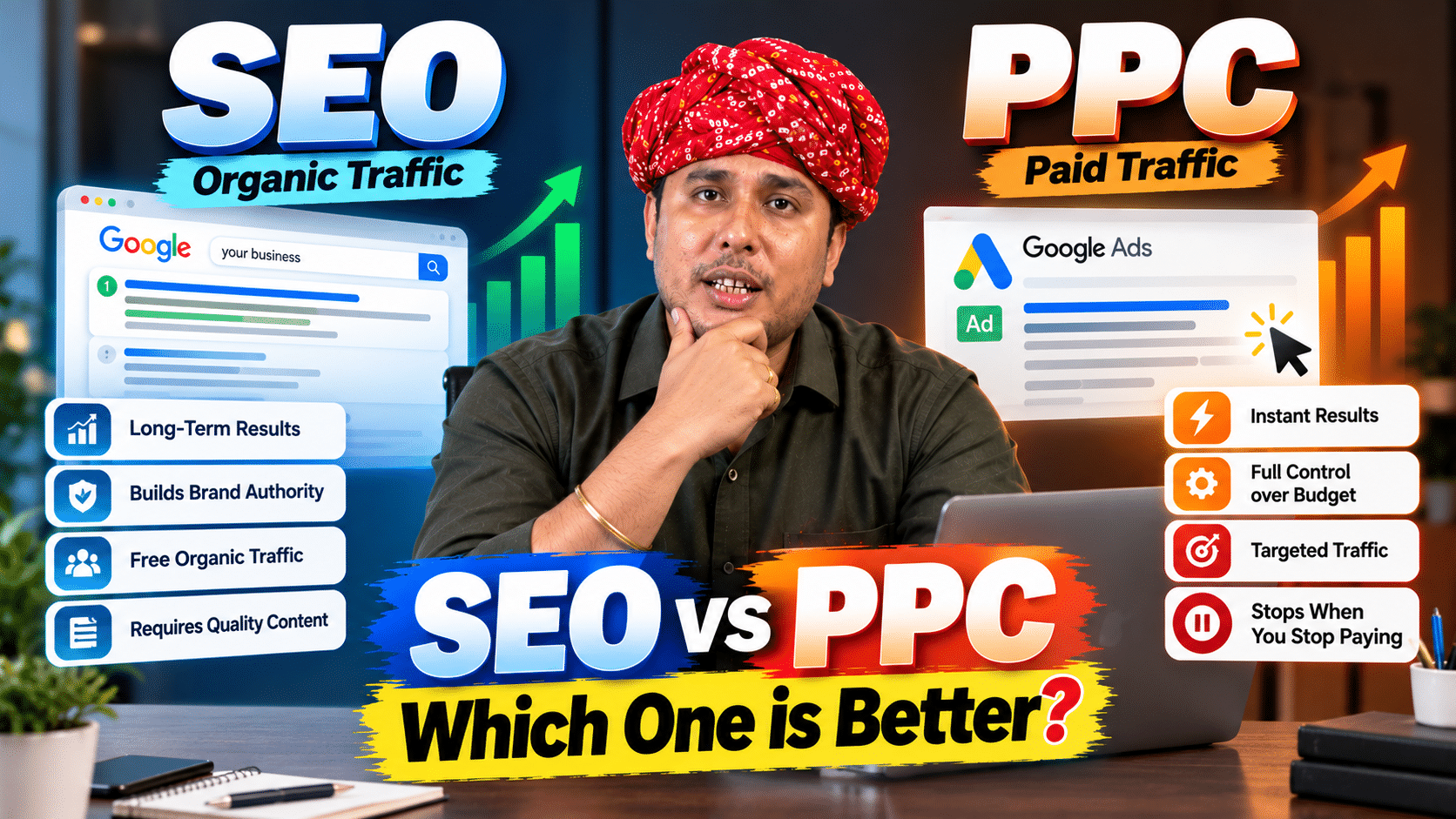
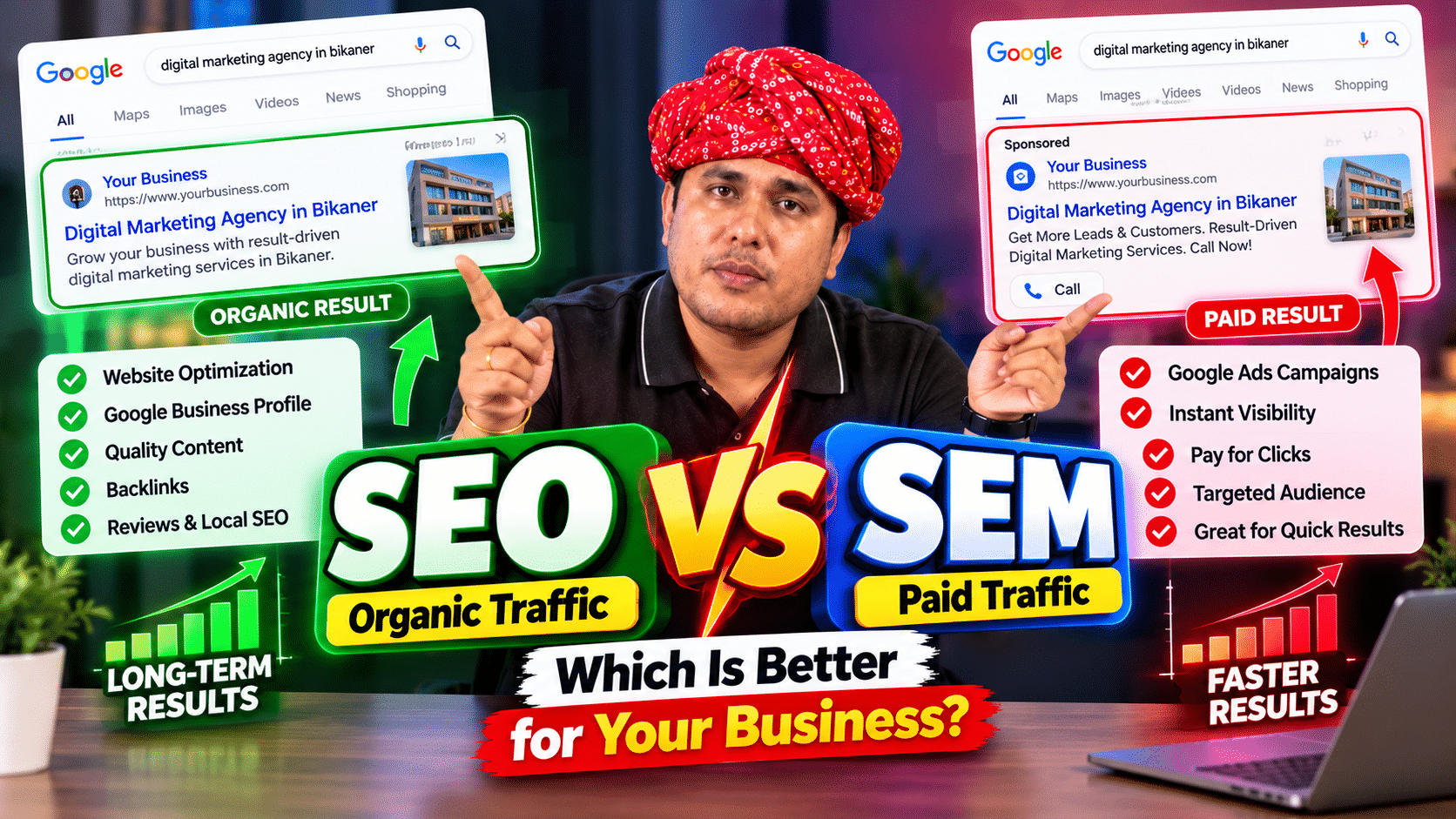
Although both strategies can improve your visibility on search engines, they work differently. SEO focuses on earning visibility through organic search results, while SEM is often used in everyday marketing discussions to describe paid search advertising through platforms such as Google Ads.
Understanding the difference between SEO and SEM can help you choose the right strategy, allocate your marketing budget, and acquire customers more effectively.
For example, a local restaurant may use SEO to improve its visibility on Google Maps and organic search results while running Google Ads to promote a special offer. Both approaches can contribute to business growth, but their costs, timelines, and long-term benefits differ.
In this guide, we will explore SEO vs SEM, explain how each strategy works, compare their advantages and limitations, and discuss how local businesses can use them together.
What Is SEO (Search Engine Optimization)?
Search Engine Optimization (SEO) is the process of improving a website’s visibility in unpaid search engine results. The objective is to help search engines understand your content and connect your website with people searching for relevant information, products, or services.
For example, suppose you own a digital marketing agency in Bikaner. When someone searches for “digital marketing agency in Bikaner,” you want your website to appear among the relevant organic results.
SEO involves improving your website’s content, technical structure, relevance, usability, and authority so that search engines can discover and evaluate its pages.
Unlike paid search advertising, you do not pay Google for every click on an organic search result. However, SEO is not free in the broader sense. It requires time, expertise, content creation, technical work, and ongoing maintenance.
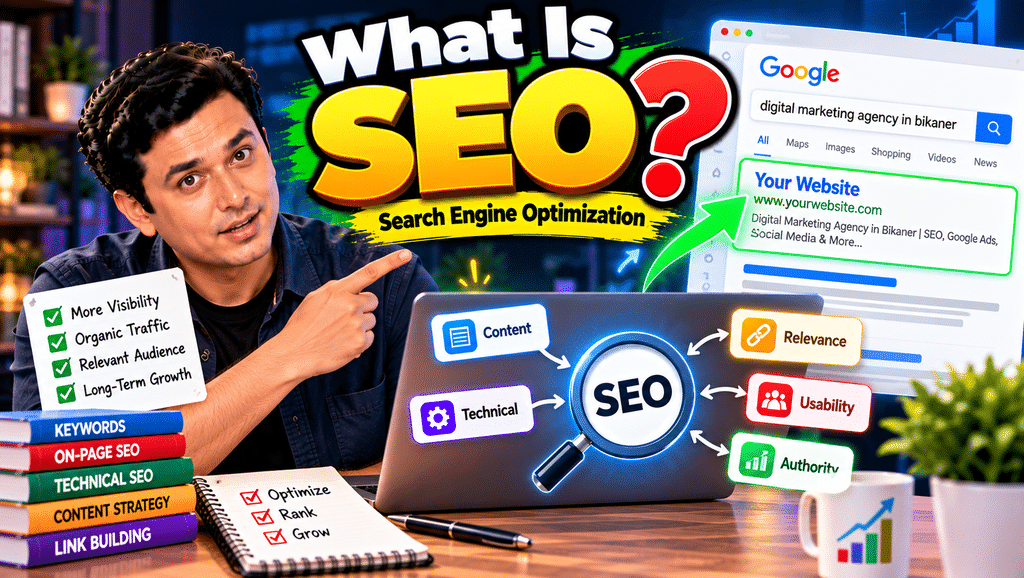
Main Types of SEO
1. On-page SEO
On-page SEO involves optimizing the elements of your website’s pages. This includes page titles, headings, relevant keywords, internal links, content quality, and descriptive image alt text.
For example, a page targeting “SEO services in Bikaner” should clearly explain the services offered, the customers served, and the value the business provides.
2. Technical SEO
Technical SEO helps search engines crawl, interpret, and index your website. Important areas include website architecture, indexing, canonical tags, mobile usability, site performance, and structured data where appropriate.
3. Off-page SEO
Off-page SEO focuses on signals and activities beyond your own website that can help establish credibility and authority. Relevant backlinks, genuine industry mentions, and legitimate editorial references can support this effort.
4. Local SEO
Local SEO helps businesses improve their visibility for geographically relevant searches.
For a local business, this can include optimizing its Google Business Profile, maintaining accurate business details, earning genuine customer reviews, creating relevant local landing pages, and building a consistent online presence.
A well-maintained Google Business Profile can help an eligible business appear in Google Maps and local search results. However, visibility depends on factors such as relevance, distance, and prominence, and no optimization guarantees a particular position.
Advantages of SEO
- Can generate organic traffic without paying for each organic click.
- Helps build long-term search visibility.
- Supports brand credibility through useful content and accurate information.
- Can attract customers actively searching for your services.
- May continue generating visits from successful pages after the initial work is completed.
Limitations of SEO
SEO takes time, and results are not guaranteed. Competition, search algorithm changes, content quality, technical issues, and customer behavior can affect rankings.
You also need to maintain your website and improve your content as competitors and search results evolve. SEO is a long-term investment, not a one-time task.
What Is SEM (Search Engine Marketing)?
Search Engine Marketing (SEM) is a term that can have different meanings depending on the context.
In the broadest sense, SEM can refer to marketing through search engines, including both organic and paid activities. However, many marketers and businesses use SEM specifically to mean paid search advertising.
For this article, SEM refers to paid search advertising, particularly campaigns run through Google Ads.
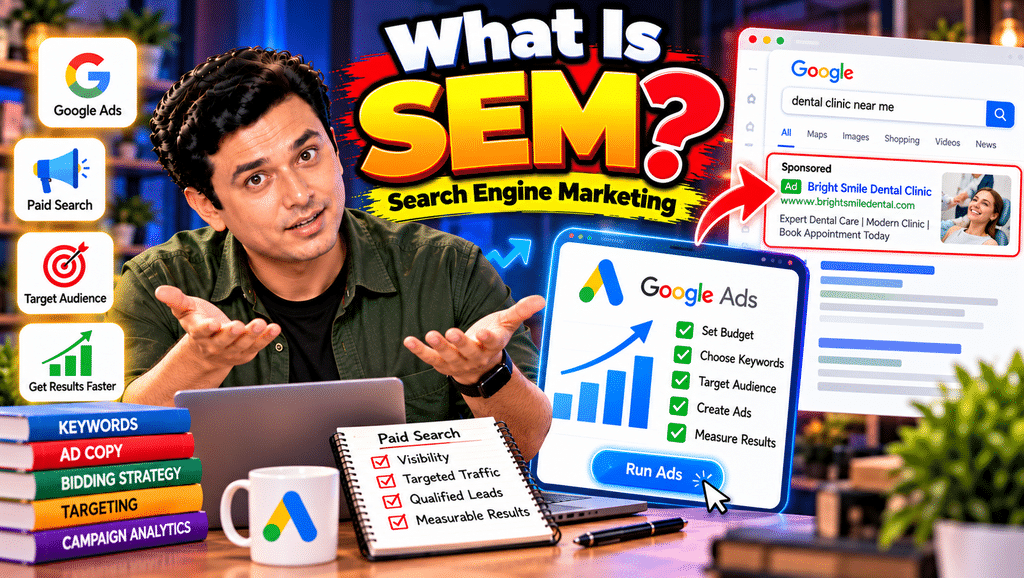
Paid search allows businesses to promote relevant landing pages or offers to people searching for particular products and services. Advertisers can select targeting options, establish budgets, choose bidding strategies, and measure campaign outcomes.
For example, a local dentist could run a Google Ads campaign targeting searches related to dental services in its service area. Interested users may see a sponsored result and click through to the clinic’s website or another supported destination.
How Does Paid Search Work?
Google Ads uses an advertising auction to determine which eligible ads appear and in what positions.
The outcome depends on several factors, including the bid, ad quality, competition, search context, and other auction-related signals. A larger budget alone does not guarantee that an advertisement will appear for every relevant search.
Depending on the campaign type and billing model, advertisers may pay for clicks or other defined interactions or results.
The objective is not simply to generate traffic. It is to attract relevant visitors who are likely to take valuable actions, such as calling a business, submitting an enquiry, booking an appointment, or purchasing a product.
Advantages of SEM
- Can generate visibility relatively quickly after a campaign becomes eligible to serve.
- Provides control over advertising budgets and targeting options.
- Allows businesses to test offers, keywords, and landing pages.
- Can support time-sensitive promotions and product launches.
- Provides measurable data on campaign costs and tracked conversions.
Limitations of SEM
Paid advertising requires ongoing expenditure. When a campaign stops serving, the paid visibility it generated generally stops as well.
Competition can increase advertising costs, and a high number of clicks does not automatically translate into sales.
Poor targeting, weak advertisements, an unconvincing offer, or an ineffective landing page can make campaigns unprofitable. Regular monitoring and optimization are therefore essential.
SEO vs SEM: Key Differences
Although SEO and paid search can both bring customers from Google, their operating models are different.
| Factor | SEO | SEM (Paid Search) |
|---|---|---|
| Visibility source | Organic search results and relevant local search features | Sponsored search placements |
| Payment | No charge per organic click; work still has costs | Advertising spend under the campaign’s billing model |
| Time to results | Usually gradual | Can generate visibility relatively quickly |
| Budget control | Less direct control over traffic volume | Greater control over campaign budgets and targeting |
| Sustainability | Successful pages may continue attracting visitors | Paid visibility generally requires continued spending |
| Competition | Compete for organic relevance and authority | Compete in advertising auctions |
| Testing | Useful for long-term content and website improvements | Useful for testing offers and advertising messages |
| Common metrics | Organic impressions, clicks, rankings, leads, and sales | Spend, clicks, conversion rate, cost per acquisition, and revenue |
Neither strategy is automatically more profitable. The right choice depends on your business model, competition, customer acquisition costs, and growth objectives.
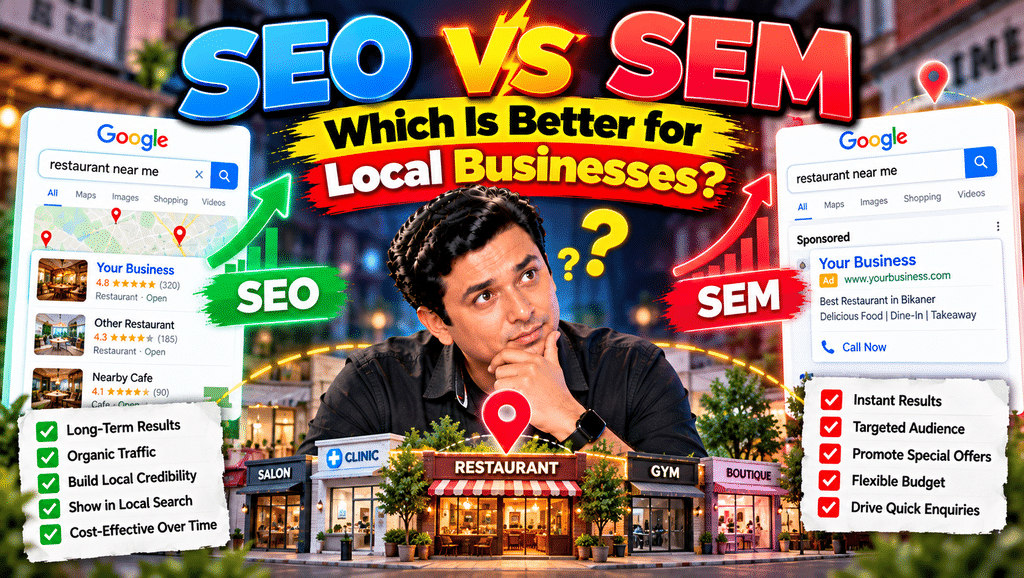
SEO vs SEM: Which Is Better for Local Businesses?
For many local businesses, SEO is an important foundation because customers frequently search for nearby services and businesses before making a decision.
However, the best strategy depends on how quickly you need results, how customers find your business, and how much you can invest.
When Should You Prioritize SEO?
SEO can be a strong priority if you want to develop a long-term source of organic visibility.
Consider a coaching institute in Bikaner that wants to attract students searching for digital marketing courses. It could improve its website, create useful course pages, maintain its Google Business Profile, collect genuine reviews, and publish educational content related to students’ questions.
Over time, these activities may help the institute become more visible to relevant searchers.
The benefit is that successful organic pages and a credible local presence may continue attracting potential customers without a payment for every visit.
However, local rankings are not permanent, and SEO requires ongoing attention.
When Should You Prioritize SEM?
Paid search can be useful when you need to promote a time-sensitive offer, test demand for a service, or generate enquiries while your organic visibility develops.
For example, a dental clinic launching a new service could use Google Ads to reach relevant searchers in its service area. The campaign could direct them to a dedicated landing page explaining the service and offering an appointment enquiry option.
The clinic should measure qualified enquiries, booked appointments, and acquisition costs rather than judging success by clicks alone.
Paid search can provide faster exposure, but it does not guarantee leads or profitable customers.
How to Calculate the Cost of Acquiring a Customer
One of the most important factors when comparing SEO and SEM is the cost of acquiring a customer.
With paid advertising, it is relatively straightforward to calculate the advertising cost per acquisition when reliable conversion tracking is available.
Cost per acquisition (CPA) = Advertising spend ÷ Number of acquired customers
For example, suppose a business spends ₹20,000 on Google Ads and acquires 10 customers.
Its advertising cost per customer is ₹2,000.
However, that figure does not include other costs, such as agency fees, creative production, staff time, or the cost of delivering the service.
SEO requires a different approach because expenses may include content production, technical optimization, tools, and professional fees. You should evaluate those costs over an appropriate period and compare them with the organic leads or customers generated.
In both cases, consider customer lifetime value and profit margins. Acquiring a customer is only commercially attractive when the revenue and contribution margin justify the acquisition cost.
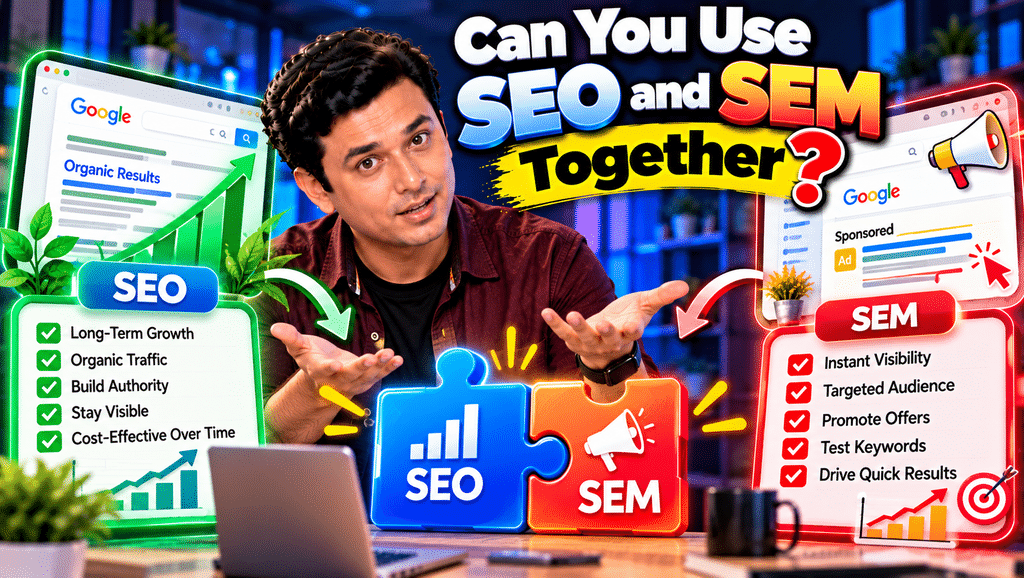
Can You Use SEO and SEM Together?
Yes. In many situations, combining SEO and paid search is a sensible strategy because the two approaches can support different stages of business growth.
Here are four practical ways to combine them.
1. Use Paid Search While Building Organic Visibility
A new business may not yet have strong organic rankings. Google Ads can help it test demand and reach relevant customers while it develops its website and SEO strategy.
This reduces the need to wait for organic visibility before testing a commercial offer.
2. Use Advertising Data to Inform SEO
Paid search campaigns can reveal which search terms attract qualified enquiries and which messages appeal to potential customers.
Use those findings to inform your organic content strategy. For example, if searches related to a particular service generate qualified leads, consider developing a detailed service page that addresses the same customer need.
Paid search data is useful evidence, but it does not guarantee that the same terms will produce equivalent organic results.
3. Improve Landing Pages for Both Channels
A well-organized landing page can support both organic visitors and paid advertising traffic.
Make sure the page explains the offer clearly, answers important questions, works well on mobile devices, and provides an obvious next step.
However, different traffic sources may have different expectations, so review performance separately where possible.
4. Measure the Combined Business Impact
Track organic and paid search performance using analytics and reliable conversion tracking.
Evaluate qualified enquiries, sales, customer acquisition costs, and revenue. Avoid relying entirely on rankings, clicks, or last-click attribution when deciding how much each channel contributes to growth.
Also assess whether paid advertising provides incremental value when your website already ranks organically for a particular query. The answer may differ by keyword, competitor activity, and business objective.
Common SEO and SEM Mistakes to Avoid
Businesses can waste time and money by misunderstanding what these strategies can deliver.
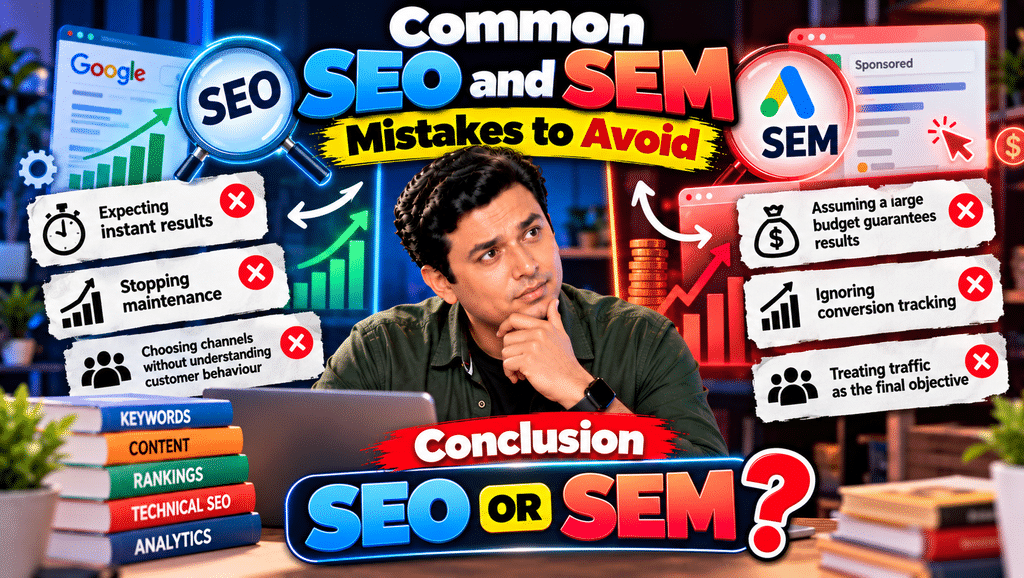
Expecting instant SEO results: Organic visibility usually requires sustained work and cannot be guaranteed.
Assuming a large ad budget guarantees results: Advertising performance depends on targeting, competition, creative quality, landing pages, and other factors.
Ignoring conversion tracking: Without reliable data, you may know how many clicks you received but not whether those clicks generated customers.
Treating traffic as the final objective: More visitors are not necessarily better if they are unlikely to purchase or enquire.
Stopping SEO maintenance: Organic rankings can change as competition and search systems evolve.
Choosing channels without considering customer behavior: The best approach depends on how your customers research, compare, and purchase products or services.
Conclusion: SEO or SEM—What Should You Choose?
SEO and SEM are different approaches to improving search visibility, but they do not need to compete with each other.
SEO helps businesses develop organic visibility through useful content, website improvements, and relevant authority signals. Paid search provides a way to buy advertising exposure and reach potential customers while campaigns are running.
For a local business that wants long-term growth, I would generally prioritize building a strong SEO foundation while using paid search when immediate visibility, testing, or time-sensitive demand makes it worthwhile.
If the budget is limited, start with the activities most closely connected to your business goals. Track qualified enquiries and sales, understand the cost of acquiring customers, and invest more as reliable evidence emerges.
SEM can help you gain faster paid visibility, while SEO can build a more sustainable source of organic traffic. Combining both strategically can help your business become less dependent on a single acquisition channel over time.

Related Posts